Footwear
Worn boots often affect movement or warmth, so repair them before long hikes.
Boots wear out, jackets tear and tools get dull. This guide explains how to keep your virtual equipment in shape on longer expeditions.
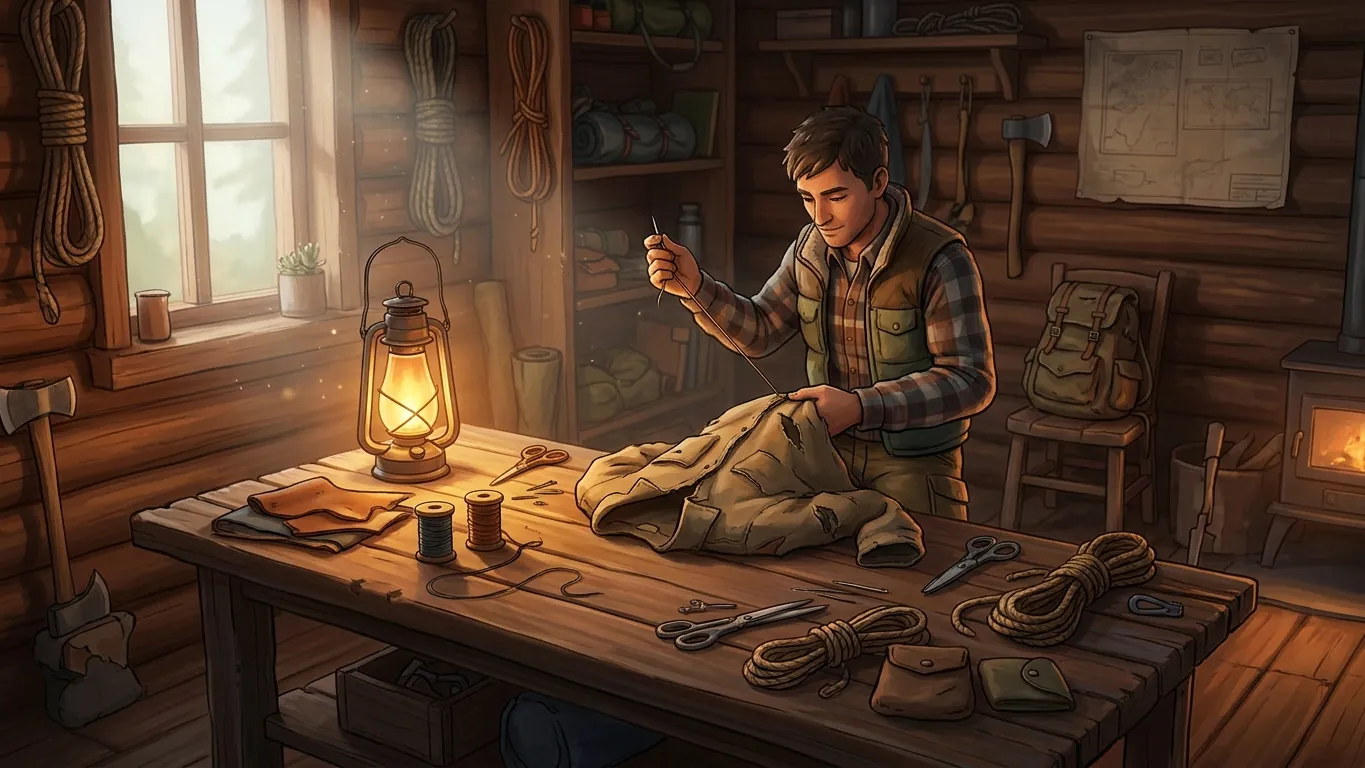
Many survival and camping games give equipment a durability value. As you use an item, its condition slowly drops. Boots wear down after long hikes, knives lose their edge and clothing tears on branches or rocks.
At first, durability can feel like a chore. But it adds an important layer to planning. Instead of finding one great item and keeping it forever, you need to care for your gear and think about how long it will last on a given trip. That care builds a connection to your equipment that many players come to enjoy.
Crafting and repairing usually require materials. Common examples in outdoor games include cloth, leather, wood, stone, thread and metal scraps. Some can be gathered from nature, while others are found in abandoned buildings or recovered by breaking down items you no longer need.
It helps to know which materials are most useful in your game. Keep a small stock of the ones you use most for repairs, but avoid hoarding everything. As covered in our article on pack weight, carrying too much can slow you down.
A quick inspection of these items can prevent unpleasant surprises far from camp.
Worn boots often affect movement or warmth, so repair them before long hikes.
Jackets and coats protect against wind and rain; small tears are easier to fix early.
Knives and hatchets are needed for firewood and crafting, so keep them sharp.
Count your matches, flint or other fire sources and pack a backup.
Check lantern fuel or batteries so you are not caught in the dark.
Inspect tents or bedrolls for damage before you count on them for the night.
Many games let you craft or find repair kits that can be used away from a workbench. Carrying a small kit on longer trips is usually a good idea. It lets you patch a torn jacket or sharpen a knife in the field instead of turning back.
Some repairs, however, may require a proper workbench or tools available only at base. Learn which fixes can be done on the trail and which must wait. That knowledge helps you decide when to push forward and when to head home.
The easiest way to manage gear is to make maintenance part of your routine. When you return to camp, take a moment to check the condition of each important item. Repair anything that is getting low before it becomes a problem.
This habit pays off on long expeditions. You will set out with equipment you can trust, and you will spend less time worrying about breakdowns far from shelter. Caring for your gear also makes the world feel more grounded, which is a big part of what makes outdoor games so absorbing.
 Capturing the view: tips for virtual trail photography
Tips for capturing beautiful screenshots in hiking and camping games: composition, lighting, weather and patience on the virtual trail.
Read more
 What outdoor games get right and wrong about hiking
A balanced look at what hiking and camping games portray well, what they simplify and why real trips need proper preparation and local guidance.
Read more
 What makes a good hiking game?
A friendly introduction to hiking games: stamina, terrain, pacing and exploration, and why walking through a virtual landscape can feel so rewarding.
Read more