Choosing the perfect campsite in outdoor games
Where you sleep can matter as much as where you walk. Here is how to read the land and set up camp with confidence.
Why campsites matter so much
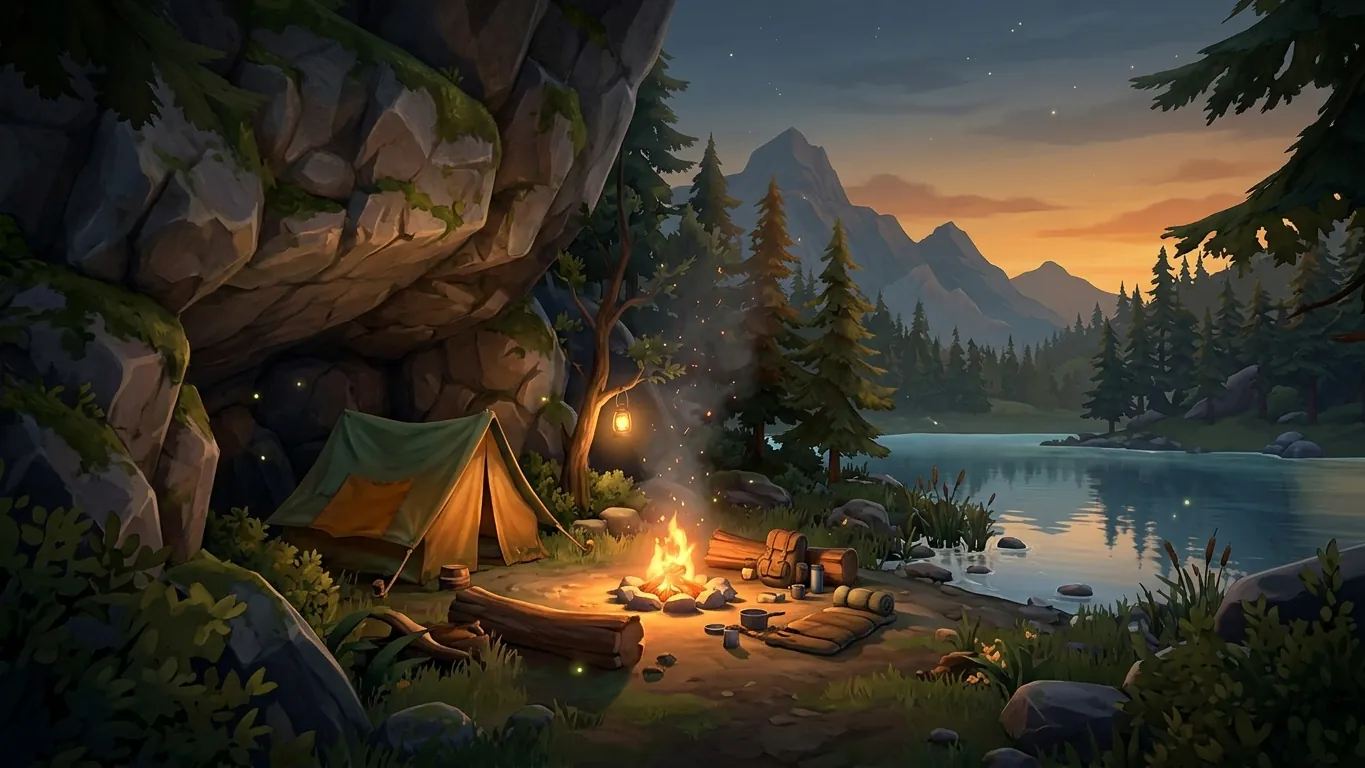
In many outdoor games, night is when things get serious. Temperatures drop, visibility shrinks and wildlife may become more active. A good campsite helps you recover stamina, stay warm and wait for daylight safely.
Even in relaxed camping games without danger, choosing a nice spot adds to the atmosphere. Waking up to a sunrise over a lake simply feels better than waking up in a muddy ditch. Whatever kind of game you play, learning to spot a good campsite is a skill worth developing.
Look for natural shelter
The first thing to check is protection from wind and weather. Rock overhangs, dense groups of trees, the leeward side of a hill or the remains of an old cabin can all reduce exposure. Many survival games track wind and temperature, so a sheltered spot can make a real difference to how warm your character stays.
Avoid exposed ridges and open meadows if a storm is coming. They may offer great views, but they leave you vulnerable when the weather turns. Save those scenic spots for clear evenings.
Water, fuel and resources
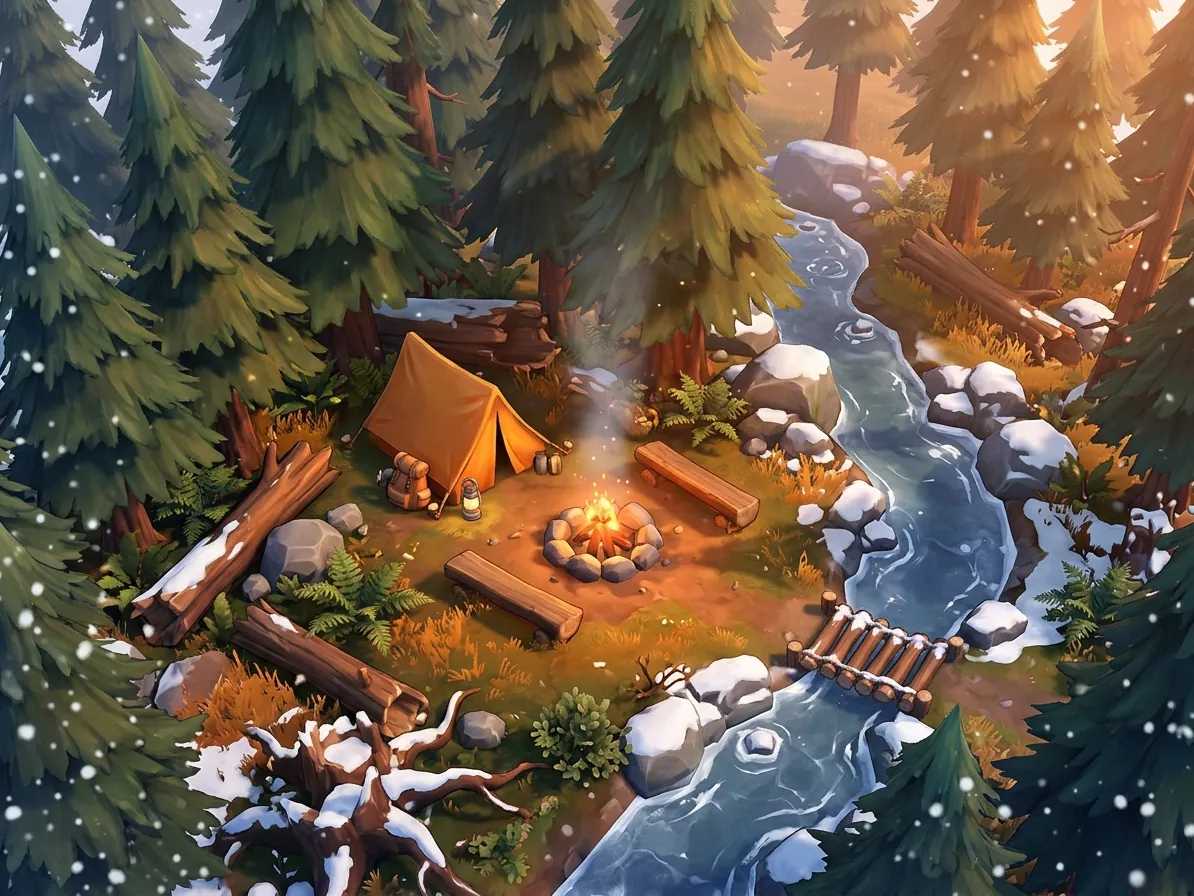
A campsite near water saves you trips later. Streams, lakes and springs let you refill containers, cook and sometimes fish. Just be careful about camping right on the bank: some games simulate rising water, cold mist or wildlife that gathers near water at night.
Fuel is the other key resource. Check for fallen branches, dry wood or other burnable materials nearby before you commit to a location. Gathering firewood is much easier in daylight, so collect it as soon as you arrive rather than waiting until dark.
Fire placement and safety
Campfires are often the heart of a camp, providing warmth, light and a place to cook. Place your fire where wind will not blow smoke or sparks into your tent. Some games simulate fire spreading, so clear space around it and avoid setting it under low branches.
If the game includes wildlife, a fire may help keep certain animals at a distance, but it rarely solves every problem. Keep your tools within reach and know your escape route.
Building a camp you will return to
Some campsites are one-night stops. Others become home bases you return to again and again. When a spot proves reliable, consider investing in it. Build a sturdier shelter, add storage, create a cooking area or set up a drying rack if the game allows it.
A well-developed base makes longer expeditions easier, because you have a safe place to rest, store supplies and plan your next route. Over time, your favorite campsite becomes a familiar landmark in the game world, and returning to it after a long hike is one of the genre's quiet pleasures.
Related articles
 Finding your way: navigation in exploration games
How to navigate exploration and hiking games without waypoints: reading maps, using landmarks, compasses and the sun to find your way.
Read more
 Rain, wind and snow: weather as a game mechanic
An explainer on how rain, wind, snow, heat and seasons work as game mechanics in outdoor games, with tips for planning around changing conditions.
Read more
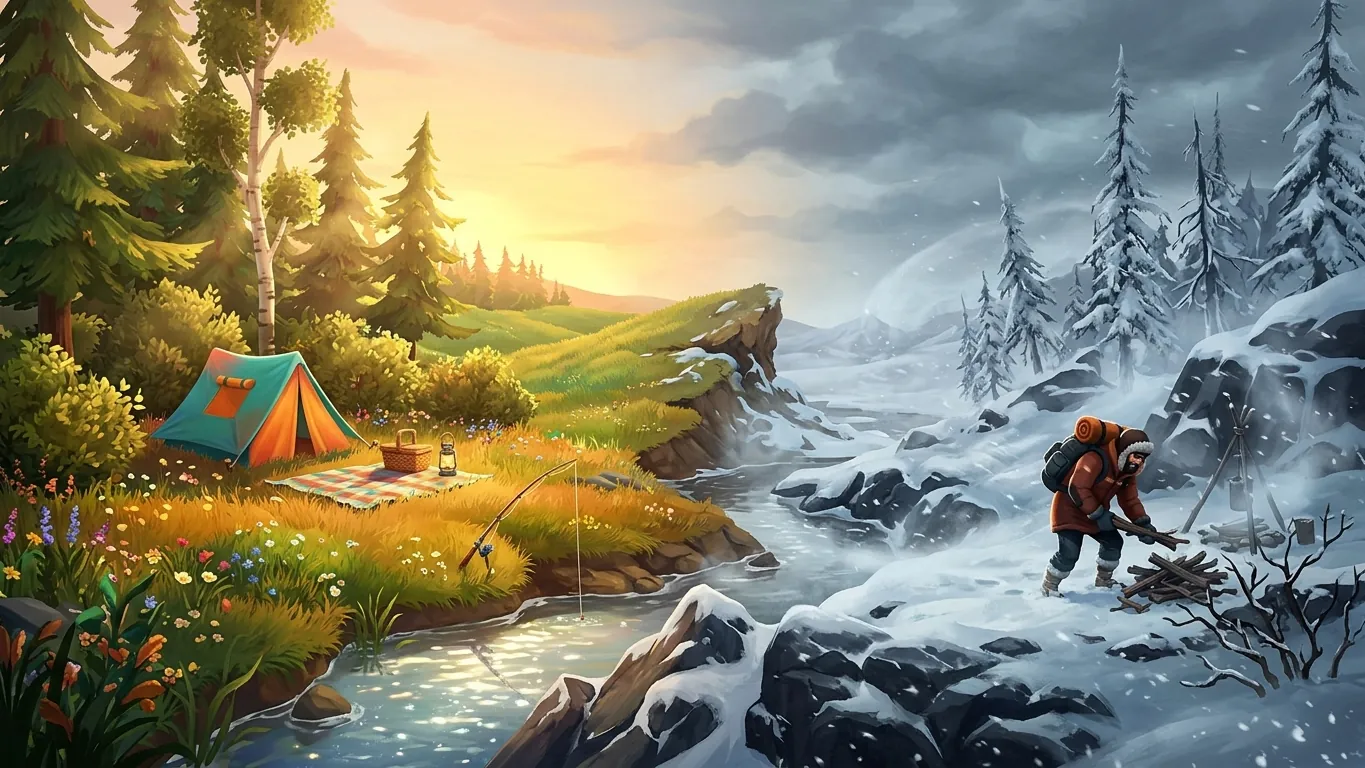 Cozy camping or hardcore survival: which trail is yours?
An opinion piece on cozy camping games and hardcore survival titles: what each style offers, who it suits and why both deserve a place on your shelf.
Read more