Finding your way: navigation in exploration games
Not every game shows you an arrow pointing to your goal. This guide covers maps, landmarks and simple tools for confident navigation.
The charm of getting a little lost
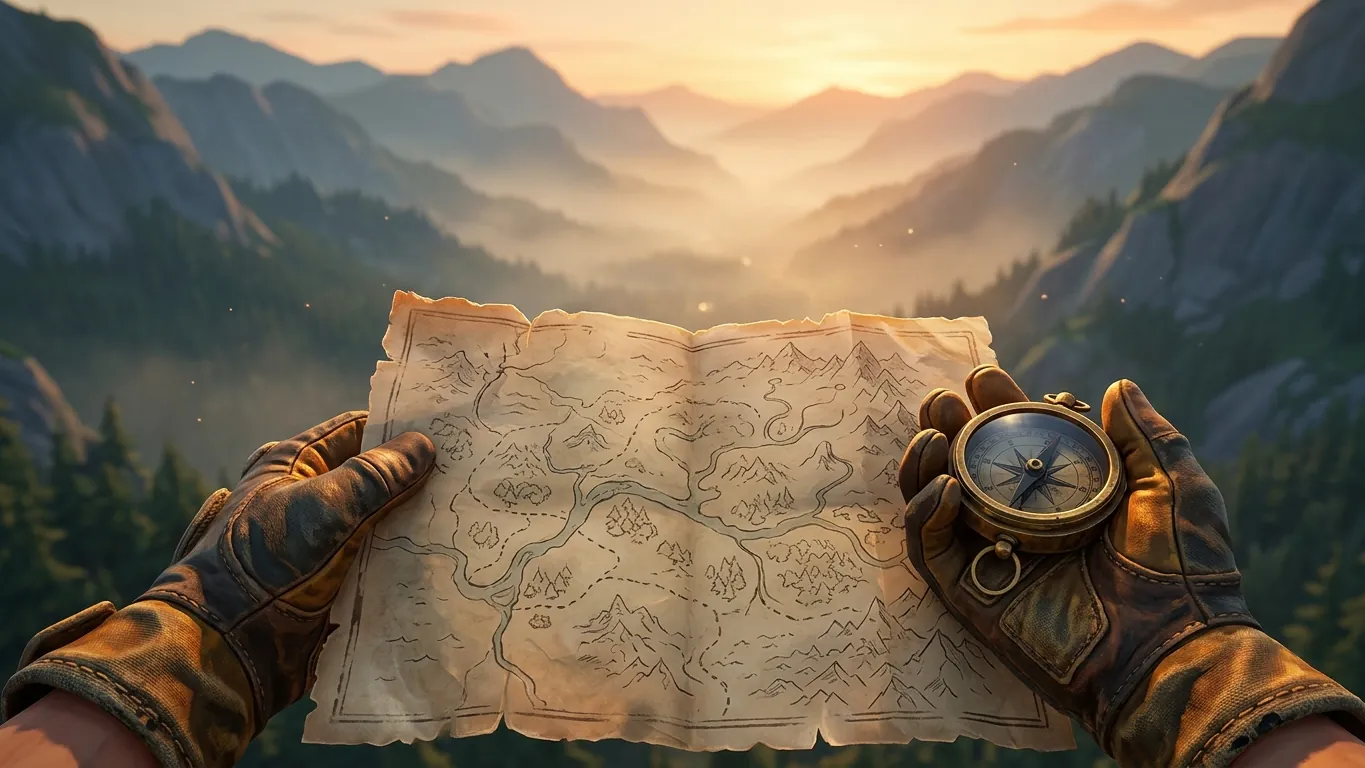
Many modern games guide you with markers and glowing paths. Exploration games often take a different route. They give you a map, a compass and your own eyes, then trust you to figure it out.
That can feel intimidating at first, but it is also what makes arriving somewhere feel meaningful. When you find a hidden cabin because you read the terrain correctly, the success is entirely yours. A bit of practice turns navigation from a source of stress into one of the most satisfying parts of the game.
Understanding your in-game map
Start by studying the map before you leave. Look for major features: rivers, lakes, mountain ranges, roads and buildings. Many games use contour lines or shading to show elevation. Closely spaced lines usually mean steep slopes, while wide spacing means gentler ground.
Some games do not show your position on the map at all. In that case, you need to figure out where you are by matching what you see around you with what the map shows. This is where landmarks become essential.
Using landmarks like a seasoned hiker
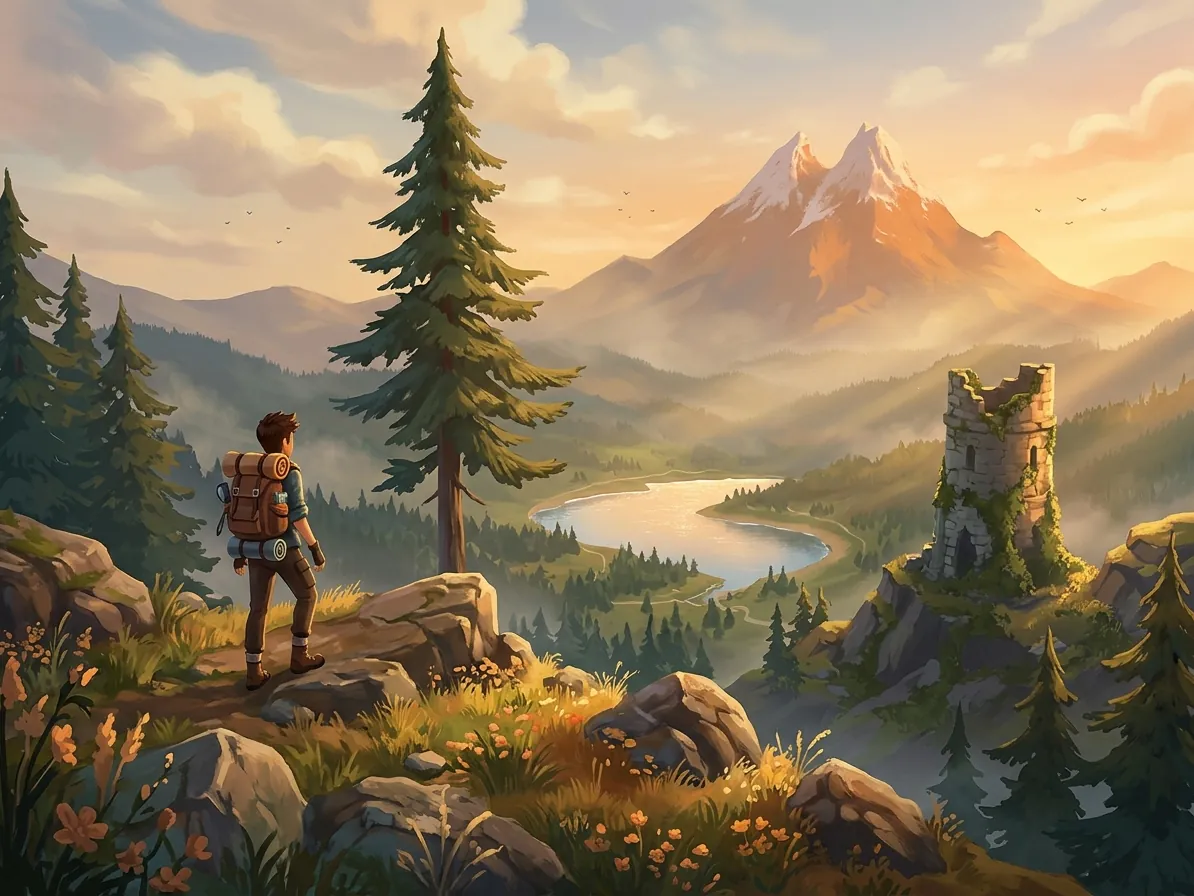
Landmarks are the backbone of navigation without markers. A tall peak, a radio tower, a distinctive rock formation or a lake shaped like a crescent can all help you orient yourself. Pick two or three visible landmarks and figure out where they sit on the map. Your position is somewhere in the area where their directions meet.
It also helps to climb. A short detour up a hill often reveals the whole surrounding area and saves you a lot of wandering later.
Compass, sun and stars
If the game includes a compass, use it constantly. Even a rough heading keeps you from drifting in circles, especially in dense forests or fog. Before setting off, note the direction from your starting point to your goal and check the compass every so often.
Without a compass, nature can help. In many games, the sun rises in one direction and sets in the opposite one, just like in the real world. Some titles even model stars accurately enough to navigate at night. Following rivers downstream is another classic technique, as they often lead toward lower ground, settlements or roads.
Practice makes the trail familiar
The best way to improve is to start small. Choose a destination close to your base and try to reach it without checking the map too often. Then try longer routes or areas with fewer obvious landmarks.
Keep mental notes or, if the game allows, mark important places on your map. Over time, you will develop an instinct for the world's layout. Paths that once seemed confusing will feel as familiar as a walk around your own neighborhood, and you will start spotting shortcuts on your own.
Related articles
 Rain, wind and snow: weather as a game mechanic
An explainer on how rain, wind, snow, heat and seasons work as game mechanics in outdoor games, with tips for planning around changing conditions.
Read more
 Cozy camping or hardcore survival: which trail is yours?
An opinion piece on cozy camping games and hardcore survival titles: what each style offers, who it suits and why both deserve a place on your shelf.
Read more
 Keep it working: crafting and repairing gear in the wild
A guide to crafting and repairing gear in survival and camping games: durability, materials, repair kits and keeping equipment ready for long trips.
Read more